
Riga, Latvia: Art Nouveau Heritage, Old Town Streets and Daugava Riverside
Riga stands out as one of Northern Europe’s most layered capitals, where architecture, trade history and everyday life intersect in a compact and walkable setting. The city developed rapidly in the late 19th and early 20th centuries, leaving behind one of the world’s richest collections of Art Nouveau buildings. At the same time, its medieval core and riverside districts offer a different rhythm, shaped by centuries of Hanseatic commerce and modern urban renewal. A visit to Riga is less about ticking landmarks off a list and more about understanding how these distinct parts of the city connect.
Art Nouveau in Riga: Architecture with Identity
Riga’s Art Nouveau district is not a single street but an entire area, mainly centred around Alberta iela and Elizabetes iela. More than a third of the city’s central buildings were constructed in this style between 1895 and 1915. Architects such as Mikhail Eisenstein and Konstantīns Pēkšēns created façades that combine decorative symbolism, national motifs and early modern engineering solutions.
Unlike Paris or Brussels, where Art Nouveau often appears in isolated buildings, Riga offers continuity. Walking through the district reveals how the style evolved—from highly ornamental façades with sculptural masks and floral elements to more restrained, national romantic forms using natural materials and geometric patterns. This progression reflects broader social changes, including Latvia’s growing cultural identity before independence in 1918.
Today, many of these buildings remain residential, which gives the district an authentic feel rather than a museum-like atmosphere. The Riga Art Nouveau Museum, located in a former apartment, provides insight into interior design, showing how architecture extended beyond façades into furniture, lighting and everyday objects.
Key Streets and Practical Visiting Tips
Alberta iela is often the first stop, and for good reason: it concentrates several of the most elaborate façades in a short distance. However, quieter streets such as Strēlnieku iela or Antonijas iela offer a more relaxed experience and fewer crowds, especially in the early morning.
Photography is best done in soft daylight, as strong shadows can obscure façade details. Late spring and early autumn are particularly suitable seasons, when natural light enhances colours without the harsh contrast of midsummer sun or winter gloom.
Most buildings are privately owned, so access is limited. Visitors should treat entrances and courtyards respectfully. Guided walking tours can provide context about architects, symbolism and restoration efforts, which are not immediately obvious from a casual walk.
The Old Town: Medieval Core and Urban Continuity
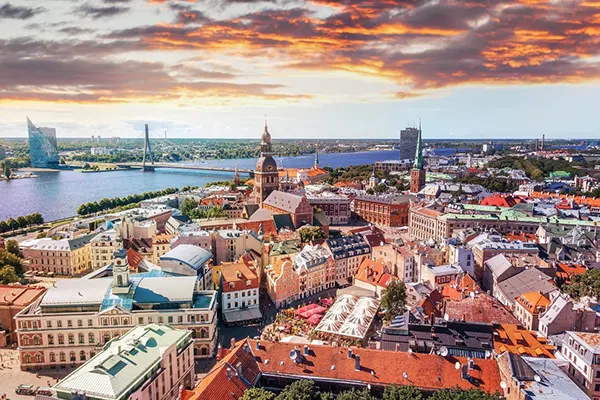
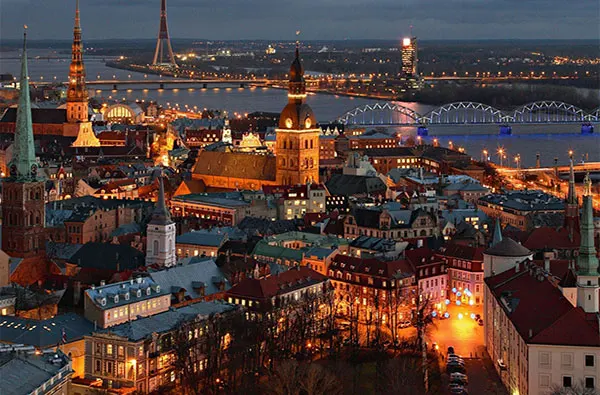
Riga’s Old Town (Vecrīga) forms the historical centre, located near the Daugava River. Its layout dates back to the 13th century, with narrow streets, irregular squares and fortified structures that once defined the city’s defensive system. Key landmarks include the House of the Blackheads, Riga Cathedral and St Peter’s Church.
Despite heavy damage during the Second World War, much of the Old Town has been carefully reconstructed using historical references. This makes it both authentic in layout and partially modern in execution. Cobbled streets, guild houses and merchant buildings reflect Riga’s role in the Hanseatic League, when it served as a major trading hub between Western Europe and Russia.
Today, the area balances tourism and local life. Cafés, small shops and cultural institutions coexist with residential spaces. The Old Town is compact enough to explore on foot within a day, but its value lies in slowing down and noticing details such as door carvings, hidden courtyards and historical plaques.
Landmarks Worth Attention
The House of the Blackheads is one of the most recognisable buildings, rebuilt after wartime destruction. Its façade reflects the wealth of merchant guilds, while the interior hosts exhibitions and events. Nearby, Riga Cathedral offers a different atmosphere, combining Romanesque, Gothic and Baroque elements.
St Peter’s Church provides one of the best panoramic views in the city from its tower. The climb or lift access is worth considering early in the visit, as it helps orient yourself geographically.
The Three Brothers, a group of historic houses, illustrate residential architecture from different centuries. Although modest compared to grand landmarks, they give a clearer sense of how people actually lived in medieval Riga.
The Daugava Riverside: Space, Views and Modern Riga
The Daugava River has always shaped Riga’s development, serving as a trade route and natural boundary. Today, the riverside offers open space, walking paths and views of both historic and modern architecture. The contrast between church spires and contemporary buildings such as the National Library reflects the city’s ongoing transformation.
One of the main walking areas runs along the embankment near the Old Town. From here, visitors can see bridges connecting different districts, as well as river traffic that still plays a role in local logistics and tourism. The area is particularly active during public events and festivals.
Across the river, the National Library of Latvia stands as a modern landmark. Its design symbolises knowledge and cultural continuity, and its observation areas provide a different perspective on the city skyline.
Where to Walk and What to Notice
The promenade near Akmens Bridge is a good starting point for a riverside walk. It offers clear views of the Old Town and is easily accessible from central areas. Benches and open spaces make it suitable for short breaks during sightseeing.
Further along, quieter sections of the riverbank allow for longer walks away from the busiest tourist zones. These areas reveal a more everyday side of Riga, with locals cycling, jogging or simply spending time outdoors.
Boat tours are available but not essential to understand the river’s role. A simple walk along the embankment often provides enough context, especially when combined with views from bridges and elevated points such as church towers.