
Bilbao, Spain: Architecture, Riverfront Walks and Day Trips to the Atlantic
Bilbao has undergone one of Europe’s most convincing urban transformations. Once defined by shipyards and heavy industry, the city is now recognised for contemporary architecture, carefully restored historic quarters and access to the rugged Atlantic coastline of northern Spain. As of 2026, Bilbao stands as the cultural and economic heart of the Basque Country, combining Michelin-starred dining, world-class museums and efficient public transport with a relaxed, walkable atmosphere. This guide focuses on the city’s architecture, its riverfront promenades and the most worthwhile day trips to the ocean.
Contemporary Architecture and the “Bilbao Effect”
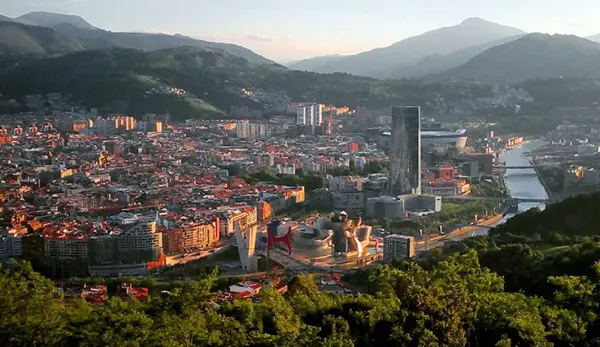
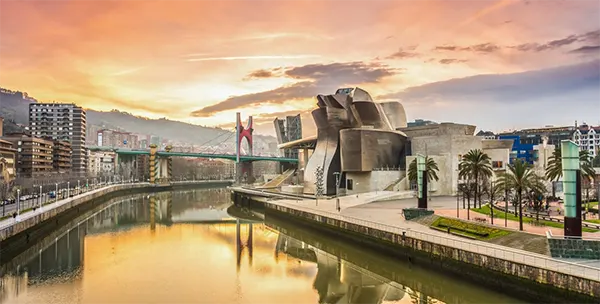
No discussion of Bilbao’s modern identity is complete without the Guggenheim Museum Bilbao. Designed by Canadian-American architect Frank Gehry and opened in 1997, the titanium-clad structure transformed the city’s international reputation. Its fluid forms reflect both the nearby Nervión River and the maritime history of the region. By 2026, the museum remains a central cultural institution, hosting rotating international exhibitions alongside its permanent collection of modern and contemporary art.
Close to the Guggenheim stands the Iberdrola Tower, completed in 2011 and still the tallest building in the Basque Country at 165 metres. Designed by César Pelli, the glass-clad skyscraper represents Bilbao’s economic renewal and its role as a business hub. The surrounding Abandoibarra district illustrates careful urban planning, where former industrial land has been repurposed into green spaces, cultural venues and residential areas.
Another architectural highlight is the Zubizuri Bridge by Santiago Calatrava. Its white arch and glass walkway connect both sides of the river and demonstrate how infrastructure in Bilbao is treated as civic art. The nearby Azkuna Zentroa, redesigned by Philippe Starck from a former wine warehouse, adds further depth to the city’s architectural narrative, combining cinema, exhibitions, design spaces and a rooftop swimming pool supported by uniquely decorated columns.
Historic Layers: From Medieval Streets to Belle Époque Elegance
While modern landmarks attract attention, Bilbao’s Casco Viejo offers a contrasting atmosphere. Founded in the 14th century, the Old Town is structured around the “Siete Calles” (Seven Streets), narrow lanes lined with traditional Basque taverns, independent shops and centuries-old churches. The Cathedral of Santiago, an important stop on the Northern Way of the Camino de Santiago, reflects Gothic and later architectural additions.
The Plaza Nueva, built in the 19th century in neoclassical style, remains a social focal point. On Sundays, it hosts a small market for books and collectibles, while throughout the week it is known for pintxos bars serving regional specialities such as bacalao al pil-pil and txangurro. These culinary traditions form part of the city’s identity as much as its buildings.
Moving towards the Ensanche district reveals wide boulevards and elegant façades influenced by Parisian urban planning. The Teatro Arriaga, inspired by the Palais Garnier in Paris, underlines Bilbao’s cultural ambitions in the late 19th century. Together, these areas demonstrate how the city balances preservation with innovation.
Riverfront Promenades and Urban Green Spaces
The Nervión River shapes Bilbao’s layout and daily life. Over the past two decades, extensive regeneration has prioritised pedestrian zones and cycling routes along both banks. The Paseo de Uribitarte and the Abandoibarra promenade provide uninterrupted walking paths linking major landmarks, public art installations and landscaped gardens.
Parque de Doña Casilda Iturrizar, often referred to simply as Parque de Doña Casilda, offers a green retreat near the Fine Arts Museum. With ponds, pergolas and shaded walkways, it serves as a meeting point for locals rather than a purely tourist attraction. The Fine Arts Museum itself, expanded in recent years, complements the Guggenheim with a strong collection of Spanish and Basque artists.
Further upstream, the Deusto area presents a more residential character. University buildings, local cafés and quieter river views provide a different perspective on the city. By 2026, Bilbao’s commitment to sustainable mobility includes electric tram lines, improved metro connections designed by Norman Foster and expanded cycling infrastructure.
Bridges, Views and Everyday Life by the Water
Bilbao’s bridges are both functional and symbolic. The Puente del Ayuntamiento and Puente de La Salve connect key districts, while La Salve’s red arch frames views of the Guggenheim. Each crossing offers distinct perspectives of the river, particularly at sunset when the light reflects off modern façades.
River cruises operate seasonally, providing a short overview of the city’s development from industrial port to cultural destination. Though modest in scale, these trips help contextualise the urban transformation and the strategic importance of the estuary leading to the Bay of Biscay.
Daily life unfolds along the waterfront: joggers in the early morning, families in the afternoon and residents gathering on terraces in the evening. The regeneration has not erased the city’s character; rather, it has redefined how public space is used and shared.
Day Trips to the Atlantic Coast
Bilbao’s proximity to the Atlantic is one of its strongest advantages. Within 30 to 45 minutes by car or local train, travellers can reach the coast of Bizkaia. The fishing village of Getxo, particularly the district of Algorta, combines sandy beaches with historic mansions overlooking the sea. The Bizkaia Bridge (Puente Colgante), a UNESCO World Heritage Site, connects Getxo with Portugalete and remains operational since 1893.
Sopelana and Plentzia are known for their beaches and surfing conditions. The cliffs of Sopelana offer panoramic Atlantic views, while Plentzia provides a calmer bay suitable for swimming in summer. These areas are accessible by Metro Bilbao, making them practical options for a day by the ocean without the need for a car.
For a more dramatic landscape, San Juan de Gaztelugatxe lies about 35 kilometres from Bilbao. The small islet, connected to the mainland by a stone bridge and 241 steps, gained international recognition after appearing in a major television series. However, its historical hermitage and coastal scenery remain the main draw. Visitor numbers are regulated in peak seasons to preserve the site.
Practical Planning and Seasonal Considerations
The best months for combining city exploration with coastal trips are May to October, when temperatures typically range between 18°C and 28°C. The Atlantic climate can be changeable, and even in summer brief rain showers are possible. Comfortable footwear is essential, especially for coastal walks or climbing the steps at Gaztelugatxe.
Public transport in the Basque Country is reliable, but checking updated timetables in advance is advisable, particularly outside high season. Metro Bilbao connects directly to several coastal towns, while regional buses provide access to smaller communities. Car rental offers greater flexibility for visiting multiple locations in one day.
Bilbao Airport, located around 12 kilometres from the city centre, provides direct connections to major European cities. From the airport, a regular bus service reaches the centre in approximately 20 minutes. With efficient infrastructure and a compact layout, Bilbao works well as a base for exploring both urban culture and the Atlantic shoreline.