
Giethoorn, Netherlands — The Northern Venice Without Roads
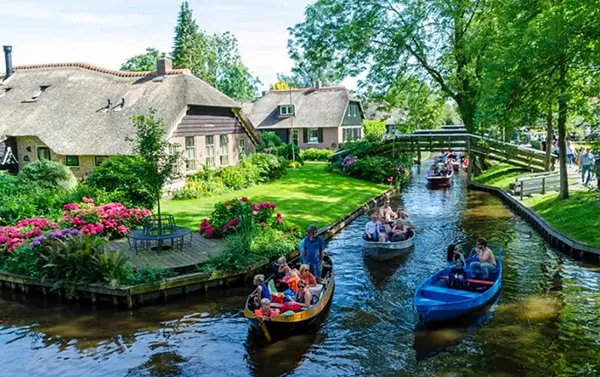
Giethoorn is a small village in the Dutch province of Overijssel that has developed in a way unlike almost anywhere else in Europe. There are no conventional streets in the historic centre. Daily life, visitor movement and logistics are organised around narrow canals, wooden bridges and water routes. Houses are positioned directly along the waterways, with private moorings replacing driveways. This structure is not a modern tourist concept but the result of centuries of local adaptation to the surrounding wetlands.
The origins of Giethoorn and its water-based layout
The history of Giethoorn dates back to the 13th century, when peat diggers settled in the area. Peat was an essential fuel source in medieval Netherlands, and its extraction gradually shaped the landscape. As peat was removed, shallow lakes and channels formed, which later became the village’s canal system. Over time, these waterways were stabilised and integrated into daily transport rather than filled in.
The absence of roads in the old village centre is a direct consequence of this development. Instead of adapting the land for carts or carriages, residents continued to use boats as the most practical solution. Narrow footpaths and over 170 small wooden bridges connect the houses, providing pedestrian access without disturbing the water network.
This layout has remained largely intact into the modern era. While roads exist on the outskirts for service access, the core of Giethoorn still operates according to principles established hundreds of years ago. This continuity makes the village a living example of traditional Dutch water management rather than a reconstructed attraction.
Architecture and everyday life along the canals
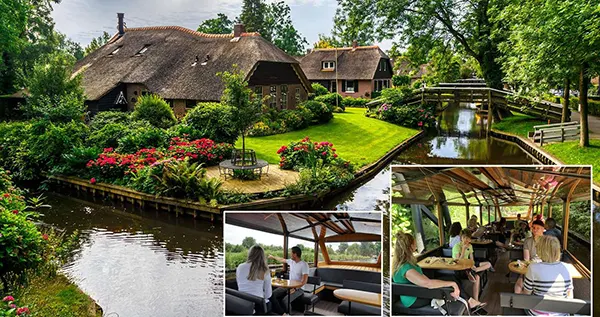
Most houses in Giethoorn are traditional farmhouses with thatched roofs, built on small islands formed by peat excavation. These structures were designed to cope with high groundwater levels and seasonal flooding. Elevated foundations and direct canal access were practical necessities, not decorative choices.
Residents continue to use boats for everyday activities, including commuting short distances, receiving deliveries and maintaining property access. Many homes have private docks, and shared landing points are common throughout the village. The slow pace of water traffic shapes daily routines and limits noise levels.
Modern utilities have been integrated discreetly to preserve the historical character. Electricity, internet and drainage systems are installed underground where possible, ensuring that the visual landscape remains focused on water, greenery and traditional buildings.
Cultural life, events and notable photo locations
Despite its small size, Giethoorn maintains an active cultural calendar. Local museums focus on regional history, peat extraction and water engineering, offering context beyond surface-level sightseeing. Seasonal exhibitions often feature photography and crafts connected to rural Dutch life.
Annual events are modest in scale but rooted in community participation. Boat parades, small music gatherings and seasonal markets take place mainly during spring and summer, when daylight hours are long and canal conditions are most suitable. These events are organised to accommodate residents first, with visitors joining respectfully.
The village’s visual appeal has made it a frequent subject for landscape photographers. Early morning and late afternoon provide the best light, especially in areas where canals curve around clusters of houses and overhanging trees.
Recognisable viewpoints and quieter areas
Popular photographic spots include canal intersections near the village centre, where multiple bridges align within a single frame. These locations offer clear views of traditional houses reflected in still water, particularly on calm days.
Less visited sections lie slightly away from the main boat routes. Here, narrower canals and private gardens create more intimate compositions. These areas are best explored on foot, using the pedestrian paths that run parallel to the water.
Responsible photography is important in Giethoorn, as many scenes include private homes. Visitors are encouraged to avoid intrusive behaviour and to respect clearly marked private docks and gardens.
Practical travel advice for visitors in 2026
Giethoorn does not have its own railway station, but it is well connected via regional transport. From Amsterdam, travellers typically take a train to Zwolle or Steenwijk, followed by a local bus to the village. The total journey usually takes around two and a half hours, depending on connections.
From Rotterdam, the most efficient route also involves a train to Zwolle with one transfer, followed by a bus. Car travel is possible, but parking is limited to designated areas outside the historic centre. From there, access continues on foot or by boat.
Public transport schedules are reliable year-round, though frequency increases during peak tourist months. Travellers are advised to check current timetables in advance, especially outside the summer season.
Boat routes, seasons and family travel tips
Boat rental is central to experiencing Giethoorn. Small electric boats, often referred to as whisper boats, are available without a licence. They operate at low speeds to protect canal banks and maintain safety. Clearly marked routes guide visitors through both central and quieter sections.
The main boating season runs from April to October, with the highest demand in July and August. Spring offers calmer conditions and fresh greenery, while early autumn provides fewer crowds and stable weather.
For families travelling with children, life jackets are widely available, and routes are generally safe and well regulated. Shorter boat circuits and picnic areas make it possible to plan relaxed visits without long hours on the water.