
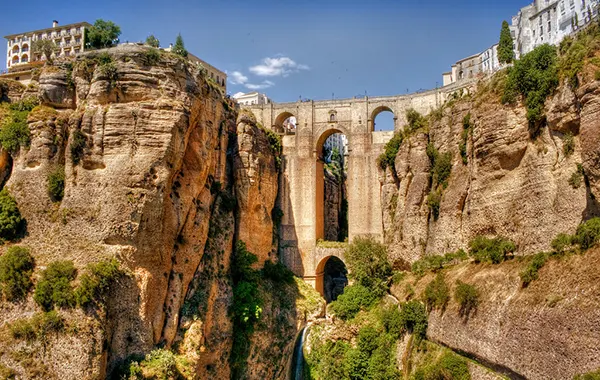
Ronda, Spain: Puente Nuevo Bridge, the Gorge and Andalusian Landscapes
Ronda is one of the most distinctive historic towns in Andalusia, located in Málaga Province in southern Spain. Perched high above a dramatic gorge, the town is known for its remarkable setting, centuries-old architecture and panoramic views across the surrounding mountains. While many visitors arrive to see the famous Puente Nuevo bridge, Ronda offers much more than a single landmark. Its cultural heritage, natural scenery and historical significance make it one of the most rewarding destinations in inland Spain in 2026.
The Historic Importance of Ronda and Its Unique Setting
Ronda stands approximately 740 metres above sea level and is divided by the El Tajo gorge, a natural canyon carved by the Guadalevín River over thousands of years. The gorge reaches depths of around 120 metres, creating one of the most striking urban landscapes in Spain. The town’s location provided natural protection throughout history and contributed to its strategic importance.
The area has been inhabited since prehistoric times, while Roman and Moorish influences remain visible throughout the old quarter. During the Islamic period, Ronda developed into an important regional centre. Defensive walls, gates and archaeological remains still illustrate the town’s medieval character and its role in Andalusia’s history.
Today, visitors can walk through narrow streets lined with traditional whitewashed buildings, historic churches and former Moorish structures. The combination of cultural heritage and dramatic scenery has helped Ronda maintain its reputation as one of Andalusia’s most recognisable destinations.
Why Ronda Continues to Attract Travellers
Unlike many coastal destinations, Ronda offers a slower pace and a stronger connection to regional history. Travellers often appreciate the opportunity to explore authentic Andalusian architecture while enjoying views that extend across mountain ranges and agricultural valleys.
The town is also associated with notable cultural figures. Writers such as Ernest Hemingway and Orson Welles spent time in Ronda and referenced its atmosphere in their work. Their interest contributed to the town’s international profile during the twentieth century.
In 2026, improved transport links from Málaga, Seville and Granada make Ronda accessible as either a day trip or a longer stay. Many visitors choose to spend at least one night in the town to experience the quieter evening atmosphere after most day-trippers have departed.
Puente Nuevo: The Symbol of Ronda
Puente Nuevo, meaning “New Bridge”, is the landmark most closely associated with Ronda. Construction began in 1759 and was completed in 1793 after several engineering challenges. The bridge spans the El Tajo gorge and connects the historic old town with the newer districts that expanded during the eighteenth century.
Rising approximately 98 metres above the river below, the structure represents one of the most impressive examples of civil engineering from its era. Built primarily from local stone extracted from the gorge itself, the bridge blends naturally into the surrounding landscape while remaining visually dominant.
The central chamber located within the bridge has served different purposes throughout history, including use as a prison. Today, visitors can learn about the bridge’s construction and historical significance through exhibitions and interpretive displays located inside the structure.
Best Viewpoints Around the Bridge and Gorge
Several viewpoints offer different perspectives of Puente Nuevo. One of the most popular routes leads down into the gorge, where visitors can appreciate the bridge’s full height and architectural proportions from below. This walk requires moderate physical effort but rewards travellers with exceptional photographic opportunities.
Mirador de Aldehuela, located adjacent to the bridge, provides one of the easiest and most accessible viewing locations. From here, visitors can observe both the canyon walls and the distant Andalusian countryside stretching towards the horizon.
Another recommended viewpoint is the Camino de los Molinos trail. This route reveals the geological scale of the gorge while offering less crowded perspectives of the bridge. Early morning and late afternoon often provide the most favourable lighting conditions for sightseeing and photography.
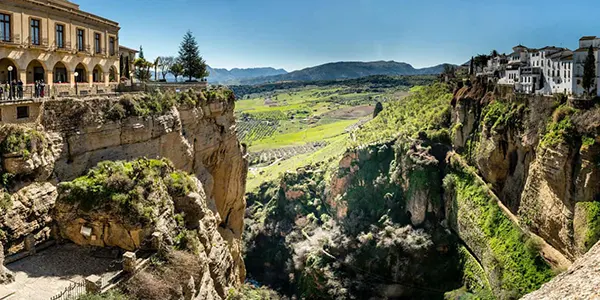
Andalusian Landscapes Surrounding Ronda
Beyond its urban attractions, Ronda serves as a gateway to some of southern Spain’s most attractive natural environments. The surrounding region features rolling hills, olive groves, vineyards and mountain ranges that define the character of inland Andalusia.
The Sierra de las Nieves National Park, located near Ronda, protects a diverse ecosystem that includes rare Spanish fir forests and numerous wildlife species. Hiking routes of varying difficulty allow visitors to explore landscapes that contrast sharply with the busy coastal resorts found elsewhere in the region.
The agricultural traditions of the area remain important in 2026. Local producers continue to cultivate olives, grapes and almonds, contributing both to the regional economy and to the visual character of the countryside. Seasonal changes create different colours and textures throughout the year, making the landscapes appealing in every season.
Experiencing the Countryside Around Ronda
Travellers interested in outdoor activities can choose from hiking, cycling and guided nature excursions. Many routes follow historic pathways that have connected villages across Andalusia for centuries, combining physical activity with cultural exploration.
The region is also known for its wineries. Several estates near Ronda produce wines that reflect the area’s altitude and climate conditions. Guided visits often include vineyard tours and tastings that provide insight into local agricultural traditions.
Whether viewed from the heights of Puente Nuevo, from a mountain trail or from a countryside road, the landscapes around Ronda remain among the defining features of the destination. Their combination of natural beauty, historical context and regional character continues to attract travellers seeking a deeper understanding of Andalusia beyond Spain’s major cities.