
Tallinn in Winter: A Route Through the Old Town, Seafront and Modern Districts
Winter gives Tallinn a completely different rhythm compared with the busy summer season. Snow-covered medieval streets, frozen views over the Baltic Sea and illuminated courtyards make the Estonian capital one of the most atmospheric cities in Northern Europe between December and February. The city is compact enough for long walks, yet diverse enough to combine Gothic architecture, industrial waterfront areas, contemporary design districts and quiet residential quarters within a single route. A winter visit also allows travellers to see how locals actually use the city outside the tourist high season, from traditional cafés inside centuries-old buildings to modern cultural spaces created in former factories and shipyards.
Walking Through Tallinn’s Old Town in Winter
Tallinn’s Old Town remains the centrepiece of any winter route through the city. Divided into the Upper Town and Lower Town, the area has preserved much of its medieval street layout and defensive structures. During winter mornings the cobbled lanes are usually quieter, especially after fresh snowfall, which makes landmarks such as Viru Gate, Town Hall Square and St Catherine’s Passage feel more authentic than during the crowded summer period. Many buildings date back to the 14th and 15th centuries, and several merchants’ houses still retain original façades and vaulted interiors.
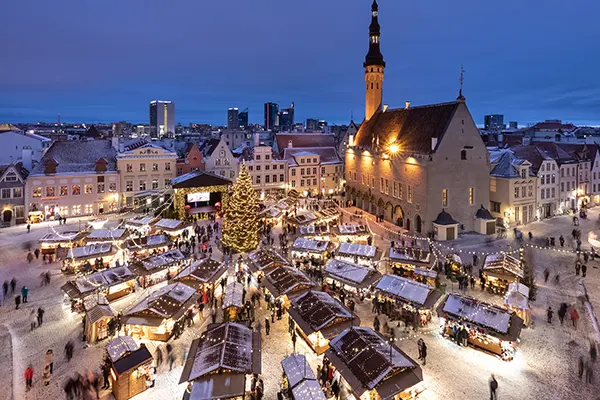
Town Hall Square becomes particularly active from late November through early January when Tallinn’s Christmas market operates near the Gothic town hall. Local vendors sell mulled wine, Estonian pastries, woollen goods and regional food products. The square is also known for displaying one of Europe’s most historically recognised Christmas trees, connected to traditions dating back several centuries. Even outside the festive period, cafés and bakeries remain open throughout winter, offering shelter from the cold while preserving the traditional atmosphere of the district.
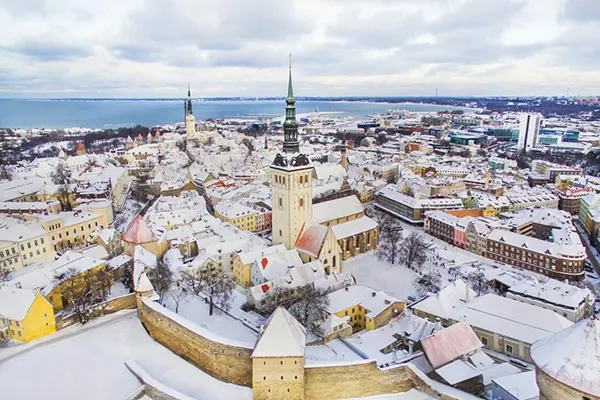
For travellers interested in panoramic viewpoints, the Upper Town provides several excellent stops. Kohtuotsa viewing platform is among the most photographed locations in Tallinn during winter because it overlooks red rooftops, church towers and the Baltic coastline under snowy conditions. Nearby Alexander Nevsky Cathedral and Toompea Castle show how different architectural influences shaped Estonia through Russian imperial and medieval Northern European periods. Walking slowly through these streets is important in winter because icy cobblestones are common, particularly during evening hours.
Historic Churches, Courtyards and Winter Cafés
Several churches inside the Old Town become especially striking during winter due to reduced daylight and evening illumination. St Olaf’s Church, once considered one of the tallest buildings in the world during the medieval period, stands out against the pale winter sky. St Nicholas’ Church, meanwhile, functions partly as a museum and concert venue, often hosting classical music performances during the colder months. These venues provide a quieter cultural alternative to crowded tourist attractions.
Hidden courtyards also become more noticeable in winter because fewer visitors rush through the streets. Masters’ Courtyard and Katariina Käik contain artisan workshops, small galleries and local craft stores where visitors can find handmade ceramics, knitwear and glass products. Many workshops focus on traditional Estonian craftsmanship rather than mass-produced souvenirs, which gives these locations more character compared with standard tourist shops found elsewhere in Europe.
Winter cafés are another important part of Tallinn’s atmosphere. Historic establishments near Raekoja plats often serve black bread, creamy fish soups and cinnamon pastries alongside hot drinks. Estonian cuisine during winter relies heavily on seasonal ingredients such as root vegetables, smoked fish and rye products. Several restaurants inside converted merchant houses combine historical interiors with modern Nordic cooking styles, reflecting how Tallinn balances preservation with contemporary urban culture.
The Baltic Seafront and Industrial Waterfront Areas
After leaving the Old Town through the northern side of the city walls, the route naturally continues towards Tallinn’s seafront districts. The harbour area has changed significantly during the last decade, with former industrial zones converted into public promenades, museums and creative spaces. During winter the coastline looks harsher and quieter, but this is precisely what gives the area its identity. Strong Baltic winds, partially frozen docks and views towards Helsinki create a distinctly Northern European atmosphere.
The Seaplane Harbour Museum is one of the most visited attractions near the waterfront during colder months. Located inside historic seaplane hangars built in the early twentieth century, the museum contains maritime exhibits, submarines and interactive naval displays connected with Estonia’s maritime history. The building itself is architecturally significant because of its early reinforced concrete shell construction. Since outdoor weather conditions can become severe in January and February, the museum also provides a useful indoor stop during long walking routes.
Another important section of the waterfront is the Noblessner district. Once a submarine shipyard linked to the Russian Empire, the area has been transformed into a mixed-use neighbourhood filled with restaurants, art spaces and residential buildings. Winter evenings in Noblessner are calmer than in central Tallinn, making the district suitable for slow walks along the marina. Contemporary architecture stands beside restored industrial structures, showing how Tallinn continues to modernise without fully removing traces of its industrial past.
Winter Walks Along the Sea and Local Food Spots
The promenade connecting the harbour zones allows travellers to continue walking towards Kultuurikatel and the Linnahall area. Linnahall itself remains one of Tallinn’s most controversial Soviet-era structures. Although partially abandoned for years, the massive concrete complex still attracts photographers and architecture enthusiasts because of its brutalist design and open sea views. During snowy weather the structure appears even more dramatic, particularly near sunset when the Baltic horizon becomes grey and silver.
Winter conditions near the sea require proper clothing because temperatures feel considerably lower due to coastal winds. Waterproof boots and layered outerwear are essential, especially when pavements become icy. However, winter also creates some of the clearest air conditions in Tallinn, allowing visibility across the Gulf of Finland on colder days. Locals continue jogging and cycling along sections of the waterfront even during freezing weather, reflecting the city’s active outdoor culture.
The seafront districts also contain several respected restaurants focusing on modern Estonian and Nordic cuisine. Menus often include Baltic herring, elk meat, mushroom dishes and locally sourced dairy products. In recent years Tallinn has gained recognition for combining traditional ingredients with Scandinavian-inspired culinary techniques. Smaller bakeries and coffee houses inside converted warehouses provide quieter alternatives to central tourist venues and are frequently visited by local residents throughout the winter season.
Modern Districts and Contemporary Urban Life
Beyond the medieval centre and harbour, Tallinn’s modern districts reveal another side of the city that many short-term visitors miss. Rotermann Quarter, located between the Old Town and the port, has become one of the clearest examples of Tallinn’s urban redevelopment strategy. Former industrial buildings made from limestone and brick now contain offices, cinemas, boutiques and restaurants. The district is especially attractive during winter evenings because architectural lighting highlights the contrast between historical warehouses and contemporary glass structures.
Kalamaja represents a different type of modern Tallinn. Traditionally a workers’ neighbourhood connected with railway and fishing industries, the area has gradually developed into one of the city’s most creative districts. Wooden houses painted in muted Nordic colours dominate the streets, while independent cafés, galleries and design stores attract younger residents and international visitors. Winter snow gives Kalamaja a quieter and more residential atmosphere compared with the centre, making it suitable for relaxed walks away from tourist-heavy areas.
Telliskivi Creative City has become one of Tallinn’s most influential cultural zones. Located inside a former industrial complex near Balti Jaam railway station, the district now hosts studios, performance venues, restaurants and seasonal markets. During winter many indoor events take place here, including concerts, photography exhibitions and local design fairs. The area demonstrates how Tallinn reuses industrial heritage instead of replacing it completely with commercial developments.
Transport, Winter Conditions and Practical Travel Tips
Public transport in Tallinn remains reliable throughout winter, although many central districts are easily explored on foot. Trams connect the harbour, city centre and several outer districts efficiently, while buses provide access to residential neighbourhoods and museums outside the historical core. Snowfall rarely causes major disruption because Estonia is accustomed to winter conditions, though pavements can become slippery during temperature fluctuations around freezing point.
Daylight hours are limited between December and January, with darkness arriving early in the afternoon. Because of this, planning routes carefully becomes important. Many travellers start mornings inside the Old Town before moving towards museums or cafés during the coldest part of the day, then finish with evening walks through illuminated districts such as Rotermann or Noblessner. Tallinn’s street lighting and decorative winter installations contribute significantly to the city’s atmosphere after sunset.
Accommodation choices vary considerably depending on the preferred travel style. Hotels inside the Old Town provide direct access to historical landmarks but may involve walking on uneven cobblestones. Modern hotels near the harbour and Rotermann Quarter often offer easier transport connections and newer facilities. Winter generally brings lower accommodation prices compared with summer weekends, except during Christmas and New Year periods when demand increases sharply due to seasonal tourism and festive events.