
Trenčín, Slovakia: How a Medieval Town Became a European Capital of Culture in 2026
In 2026, the Slovak town of Trenčín stepped into the European spotlight as one of the two European Capitals of Culture, sharing the title with Oulu in Finland. Best known for its imposing medieval castle, Roman heritage and picturesque old town, Trenčín has spent recent years preparing for a different kind of international attention. Its cultural programme brings contemporary art, music, theatre and community projects into historic buildings, residential neighbourhoods and public spaces. Under the theme “Cultivating Curiosity”, the town is using its European title to rethink how people experience culture and how neglected urban areas can become useful again. For visitors, 2026 offers an opportunity to see a historic Slovak destination undergoing a significant cultural transformation.
From a Medieval Stronghold to a European Cultural Landmark
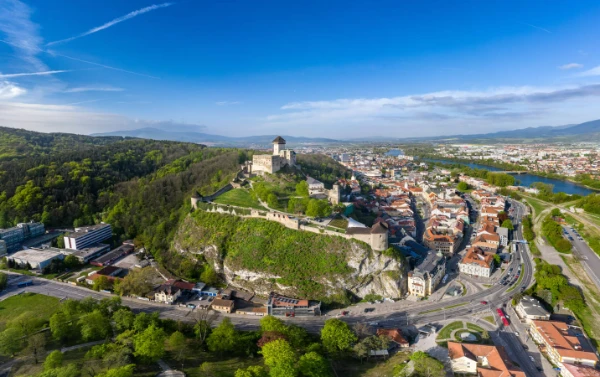
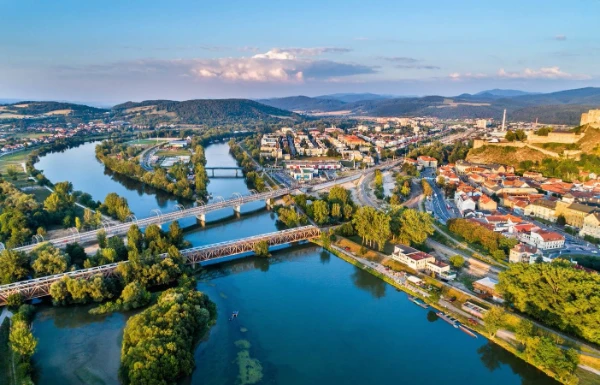
Trenčín lies in western Slovakia, beside the Váh River, approximately 120 kilometres north-east of Bratislava. Its position along an important route through the river valley helped it develop into a regional centre of trade, administration and defence. The town’s skyline remains dominated by Trenčín Castle, a fortress built and enlarged over several centuries. Beneath its walls, colourful historic buildings, churches and narrow streets preserve the character of an old Central European settlement. Unlike larger tourist destinations, Trenčín has a compact centre where many significant landmarks can be reached on foot, making its history relatively easy to explore within a single day.
The town’s story begins long before the medieval period. In AD 179, Roman soldiers left an inscription on the rock beneath the castle, commemorating a military victory during the Marcomannic Wars. The inscription refers to Laugaricio, the ancient name associated with the settlement. It remains one of the most important surviving records of Roman military activity in this part of Central Europe. Trenčín later appeared in medieval written sources in 1111 and became particularly influential under the nobleman Matúš Čák, who controlled extensive territories during the late 13th and early 14th centuries. These different historical layers remain visible throughout the town.
Trenčín’s modern identity developed alongside its historical importance. After becoming part of Czechoslovakia in 1918, it experienced industrial growth, urban expansion and substantial changes to its public spaces. The town later became an administrative centre in independent Slovakia, while its cultural life developed through galleries, museums, local organisations and major music events. The internationally recognised Pohoda Festival, held at Trenčín Airport, helped establish the area as a destination for contemporary music and cultural discussion. This combination of historical heritage and an active creative community provided a foundation for its successful European Capital of Culture application.
Why Trenčín Was Selected as a European Capital of Culture
Trenčín received the European Capital of Culture 2026 title on 10 December 2021, following a selection process in which it competed against the Slovak cities of Nitra and Žilina. The successful application centred on “Cultivating Curiosity”, a concept developed with contributions from local residents, cultural organisations, artists and regional partners. Rather than treating the designation as an opportunity to organise a single major celebration, the town proposed a broader programme of cultural development. Its ambitions included improving public spaces, supporting creative professionals, encouraging international cooperation and making cultural activities more accessible to people outside traditional arts venues.
The European Capital of Culture initiative was launched in 1985 to strengthen cultural connections across Europe and highlight the diversity of its cities. Each designated city prepares a programme with a strong European dimension while addressing its own cultural needs. Trenčín and Oulu hold the title simultaneously in 2026, although their programmes reflect different local circumstances. Oulu focuses on cultural climate change, while Trenčín concentrates on curiosity, participation and connections between communities. The Slovak town’s selection demonstrates that a successful cultural strategy does not depend on the size of a destination or its existing international reputation.
For Trenčín, the title also provides a reason to address practical challenges that extend beyond tourism. These include the use of older buildings, the relationship between the historic centre and residential districts, and opportunities for younger creative professionals. The programme encourages cooperation between local institutions and international artists while supporting projects that may continue after 2026. Its significance will therefore depend not only on visitor numbers or the success of individual festivals, but also on whether residents gain lasting cultural spaces, stronger community networks and more opportunities to participate in the town’s development.
Trenčín 2026: Festivals, Contemporary Art and Cultural Transformation
The official European Capital of Culture programme began with a three-day opening celebration from 13 to 15 February 2026. More than 100 cultural, artistic and community events were organised across the town, turning streets, squares, galleries, schools and other locations into temporary venues. The programme featured concerts, theatre, dance, exhibitions, public gatherings and multimedia installations. Its central celebration took place in the historic centre, while smaller activities were distributed across different neighbourhoods. This approach reflected one of the project’s main objectives: bringing cultural experiences closer to everyday life rather than concentrating every event in a few established institutions.
The wider programme includes more than 300 events scheduled throughout 2026, covering visual art, contemporary music, literature, performance, architecture, creative education and environmental themes. Some activities introduce international artists to Slovak audiences, while others focus on local stories and the Trenčín region’s cultural identity. Projects such as Rooted in Trenčín examine artistic connections with the area, while World Music Fusions introduces different musical traditions and collaborations. The programme also incorporates workshops, neighbourhood activities and exhibitions that encourage visitors to take part instead of simply observing. The official calendar at trencin2026.eu provides event dates, venues and admission information.
One of the most distinctive elements of Trenčín 2026 is its use of unconventional locations. Cultural interventions appear in places associated with daily routines, including transport facilities, streets and other shared spaces. The Waiting Places project, for example, introduces artistic work into locations where people normally spend time passing through or waiting. Other initiatives explore architecture, environmental responsibility and the relationship between residents and their surroundings. This approach allows visitors to encounter contemporary culture while walking around the town, although individual exhibitions and installations operate according to their own schedules and may not remain accessible throughout the year.
Major Cultural Projects and Events Worth Following
Sounds of Democracy is among the programme’s most substantial projects, developed in cooperation with the Pohoda Festival. Through concerts, screenings, discussions and performances, it examines the relationship between artistic expression and democratic movements in European history. Events during 2026 have addressed Portugal’s Carnation Revolution, European solidarity and German reunification. The series concludes on 16 and 17 November with Sounds of Democracy: Velvet, commemorating the Czechoslovak Velvet Revolution of 1989. Its announced programme includes the Czech band Pražský výběr, musicians Michael Kocáb and Milan Kňažko, Ukrainian rapper Alyona Alyona and a screening of the documentary 20 Days in Mariupol. Admission is free, subject to venue capacity.
Other projects offer different ways to understand the town’s changing cultural identity. The Light Art Festival brings illuminated installations and contemporary visual work into public spaces, while Trenčín-All-Theatre extends performing arts beyond conventional theatres. The Laboratory of Sustainable Fashion addresses clothing production, repair and reuse through exhibitions and practical activities. Architectural initiatives examine how existing buildings and urban areas can serve contemporary needs without losing their character. Visitors interested in smaller events can also find community workshops, literary programmes and experimental performances. These activities give the European Capital of Culture year a broader scope than a conventional calendar of concerts and exhibitions.
The programme reaches an important milestone with City Fiesta, the closing weekend scheduled for 27–29 November 2026. Events continue into December, but the late-November celebration provides an opportunity to reflect on the cultural year and the projects developed across Trenčín. Visitors planning a trip during this period should consult the official schedule because exhibition dates, individual performances and venue arrangements vary. Some events require tickets, while numerous community activities are free. The range of locations also makes advance planning useful: a visit focused on contemporary art may follow a different route from one centred on concerts, architecture or family activities.
What to See in Trenčín and How to Plan a Visit in 2026
Trenčín Castle remains the town’s most recognisable attraction and a natural starting point for understanding its history. Standing on a steep rocky hill, the complex contains defensive walls, towers, courtyards and historic palace buildings associated with successive periods of construction. Matúš’s Tower provides one of the castle’s defining architectural features, while the legendary Well of Love is connected with the story of Omar and Fatima. Visitors can choose between available tour options depending on access arrangements and the sections they wish to see. The climb requires comfortable footwear, particularly when approaching the upper castle, but the elevated views across the old town and Váh valley are a major attraction.
The castle also contributes directly to the town’s cultural programme. The exhibition Romans and Slovakia, running from May 2026 until January 2027, explores Roman history and archaeological discoveries connected with the region. Presented in the castle barracks, it includes material in Slovak and English and a section intended for children. Another important historical feature is the Roman inscription carved into the castle rock in AD 179. Traditionally, one of the recognised viewing points has been the building of the former Hotel Tatra, now Hotel Elizabeth. Since access arrangements can change, visitors should confirm how the inscription can currently be viewed before planning their route.
Below the castle, Mierové námestie forms the centre of historic Trenčín. This elongated square is lined with colourful townhouses, cafés, restaurants and notable religious buildings. The Piarist Church of St Francis Xavier, originally associated with the Jesuits, is among its most prominent landmarks. Nearby, the Town Tower offers another elevated perspective on the historic centre. The synagogue, completed in the early 20th century, reflects the town’s Jewish heritage and adds a different architectural character to the surrounding streets. A walk through these areas reveals how medieval, Baroque and later buildings coexist within a relatively small space. Cultural installations introduced during 2026 provide further reasons to explore beyond the principal monuments.
Getting to Trenčín, Nearby Attractions and Practical Travel Advice
Trenčín is accessible by rail from Bratislava and other major Slovak cities, making it a practical destination for independent travellers. Direct trains from Bratislava typically take around one hour and twenty minutes to two hours, depending on the service and stopping pattern. Connections also operate towards Žilina, while travellers arriving from Vienna can usually continue through Bratislava. The railway station is within walking distance of the historic centre, so a car is unnecessary for most short visits. Travellers coming from abroad should check current services through the Slovak railway operator ZSSK or the relevant international rail company, particularly when travelling during major cultural events.
The surrounding Trenčín region offers several worthwhile excursions. Trenčianske Teplice, a spa town roughly 15 kilometres away, is known for its thermal waters, historic spa buildings and woodland setting. Beckov Castle, situated south-west of Trenčín, provides another example of the region’s medieval fortifications. Visitors interested in religious heritage can consider Skalka near Trenčín, associated with an important pilgrimage tradition. Outdoor activities include walking in the nearby Brezina forest park and exploring parts of the Váh valley. Combining the historic centre with one regional attraction can turn a brief visit into a two-day itinerary without requiring long journeys between destinations.
For a first visit, two days provide a comfortable balance between historic sightseeing and cultural activities. The first day can focus on the castle, Roman heritage, Mierové námestie and the synagogue, leaving the evening free for a performance or exhibition. A second day allows time for contemporary art, neighbourhood projects or a regional excursion. Spring and early autumn generally offer pleasant conditions for walking, while the 2026 cultural calendar gives visitors reasons to travel outside the traditional summer season. As of November 2026, Trenčín Castle is open daily from 9:00 am to 4:30 pm, with the grounds closing at 5:00 pm; individual tours have earlier admission deadlines. Visitors should confirm opening hours, event reservations and transport schedules before departure. Trenčín’s European Capital of Culture year shows how a historic town can use its past as a foundation for cultural change rather than treating heritage and contemporary life as separate attractions.